I’m very new to this and have only used my first machine a few times and will want to winterize it soon. Please correct me if I’m wrong, but it seems like I need to do the following. Not sure if steps differ for different sized machines, but I have a 4GPM/4300 Belt Drive. And FYI, I’m in NJ where it’s pretty cold from November to March. So looking at about 5 months of not using it.
Empty/use all gas.
Use Pump Saver on the pump inlet
Unhook all connections (i.e downstream injector, pressure hose, unloader hose?)
Dumb Questions:
Gas wise, can I just run it till it shuts off, or should I literally empty the fuel out of the tank?
Some people mention fuel stabilizer, but I’m not really sure what the purpose is. Does that apply to me or as long as I do #1, I don’t worry about fuel stabilizer?
Do I just get a Pump Saver can from Home Depot, or is that not enough? I saw someone in another post said “Put the intake line in a bucket of windshield wash detergent and run the machine until it flows blue.” Is that the preferred method?
Can I keep the machine in a non-heated shed? If so, would it help to get a heavy blanket to lay over it to keep it a bit warmer, or is that stupid/unhelpful?
Dumbest question of all: I might be able to get some help and slowly lower the machine down my bilco door steps and into the basement for the winter. If I got it in the basement (where it would always be at least 60 degrees), would I need to do any winterizing at all?
I run it dry then unhook the fuel line, ether way should work.
You can, in my experience it kinda helps keep the fuel ‘Fresh’, but if your going to drain the tanks anyway why bother?
Its just pressurized can of anti freeze, people usually suck anti freeze from a bucket because it is cheaper and you can run it to your hoses and such.
I don’t see how it could hurt anything. ¯_(ツ)_/¯
Don’t see why not, I sometimes put my machine in the house when it freezes at night but I still have jobs during the day. It seems like a bit of a pain, but if you want to you certainly can.
If you are in NJ you probably have the possibility to work when it freezes at night so I wouldn’t shut yourself 100% until it really freezes. If you have a belt drive just read up on other peoples winterizing method and keep a few gallons mixed up in the shop so you can winterize quickly at night until you shut down all the way.
My dad use to put a blanket over his rig and a tarp over the blanket and have a office lamp by the washer and another near the plumbing. Supposedly a simple 80watt light would keep it from freezing. He worked during the days in the winter so he never winterized. Keep in mind I’m from SC so I doesn’t get crazy cold down here.
Stabil in gas tank and run it for a bit. No reason to drain gas.
Detatch your hose from your buffer to the inlet of the pump. Attach a funnel and have someone pour in RV Anti Freeze and pull your string or turn over your engine (with out starting it). Use a 1/4 of the gallon.
Blow out your pressure hoses with air compressor
I’m in MI and before I had a shop I’d do this every night from mid oct to November.
It got down to 20 last night. I blew my pumps out with an air compressor and blew the lines out. Hopefully that was enough for 1 night below freezing. Long term storage will have antifreeze.
I did the unthinkable yesterday before I “winterized” it! I washed my own house! First time in 3 years lol
Although my siding is only 4 years old and is poop brown.
I use propylene glycol based RV antifreeze for my pw and roof pump. Windshield washer fluid is methanol (methyl alcohol) based. Methyl alcohol is hard on some of the “rubber seals” in the system. Not necessarily EPDM, but Viton in particular is not very compatible with Methanol. Some of the cheaper RV antifreeze is Ethanol based which is compatible with EPDM and Viton, but depending on which chart you look at it may not be very compatible with Santoprene, which most 12v roof pump diaphragms are made of.
I used the rv antifreeze in the pump and blew out the hoses, lance and guns. Seems better to have nothing to freeze in the those then waste antifreeze on them.
I blew out my hoses too. I ran antifreeze through them then blew the antifreeze back into the bucket. I only did that because I noticed when I blew out my clear poly hose, not all the water comes out. At not while it’s still spooled up on the reel. I don’t think the water that was left would hurt much if it did freeze. Plenty of room for expansion since the hose wasn’t full.
I don’t use a buffer with my 4gpm setup, so I just made an air hose that screws into my feed hose. Then I blew the whole system out in one shot. Then I disconnected my feed hose from the pw and connected a makeshift bucket to the intake. I attached a trigger gun so I could circulate antifreeze through my by pass. Then I just disconnected my whip and blew the antifreeze in my lines, back into my bucket. Probably could have just run antifreeze into the pump but seeing that the water didn’t all come out of my clear poly hose got me paranoid.
Thanks @Patriotspwashing (and everyone else who chimed in). A few quick follow ups if you don’t mind:
So I can get this stuff , pour some in the fuel tank, run it for a bit and that’s it?
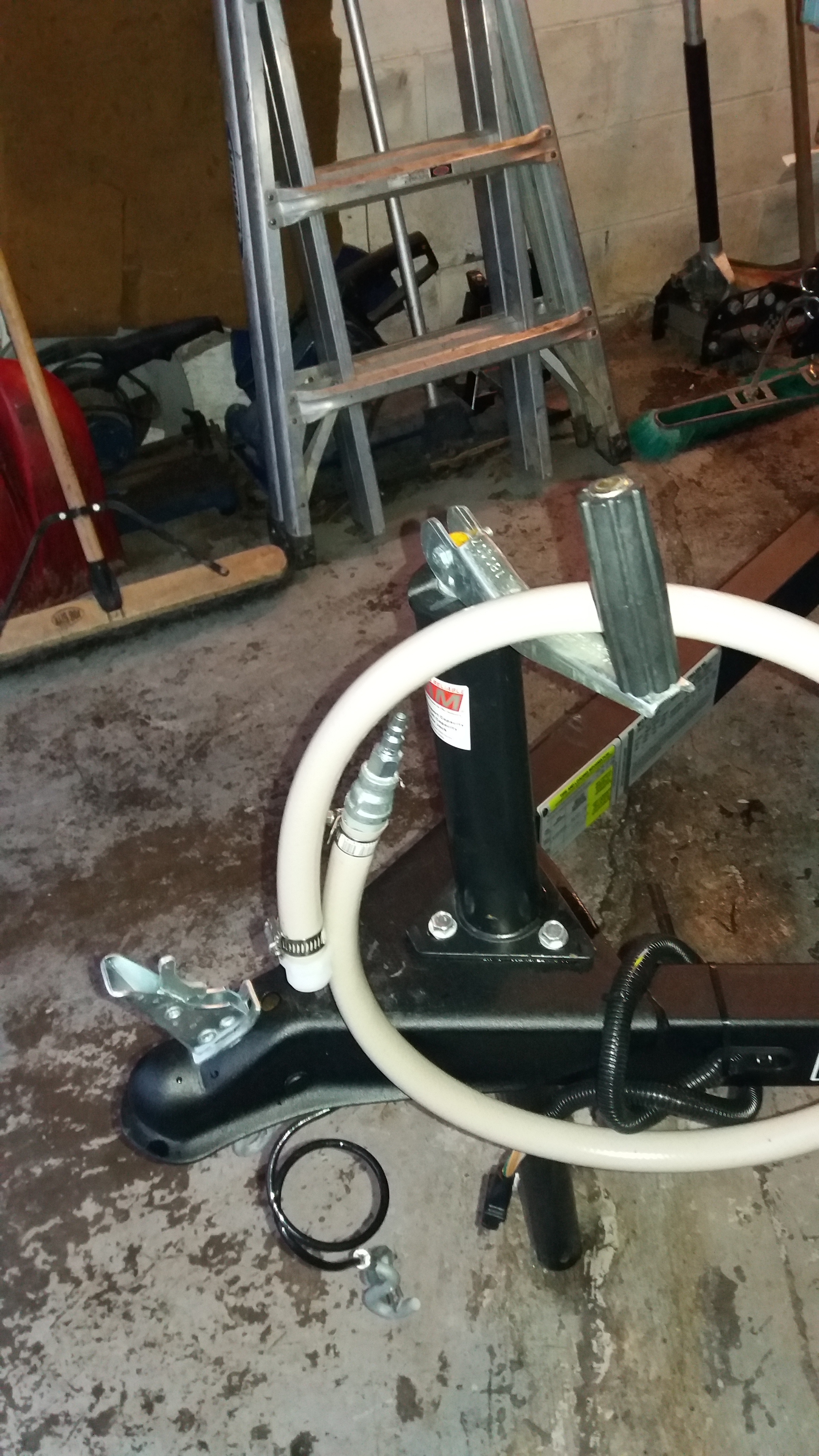
I don’t have a buffer tank (yet) and I would like to do the RV Anti-Freeze thing. Dumb question alert…Without an existing buffer tank hose, how would I suck the RV anti-freeze from a bucket into my pump? I imagine I just need to get a short piece of hose with a thread on one end and then just stick a funnel in it like you said. Just want to make sure I’m not missing something
Again, I’m not mechanically inclined, so once my short hose is connected to the inlet with a funnel in it and someone else is holding it and pouring 1/4 gallon of RV anti-freeze in it, I just need to pull the engine string (without starting it) over and over and that will suck the anti-freeze into the pump? Didn’t realize that would happen but it’s pretty cool if so. And just stop pulling once some of the anti-freeze leaks out the outlet?
My final dumb question. I don’t have an air compressor. What’s the cheapest I can get to do the job of blowing out the hoses? Can it be a dinky electric one or should it be gas powered?
If you mean one of the little 12v ones to fill a tire then no it wont work. You need either an electric one with very high CFM (cubic feet per minute) or one with a decent sized tank so you will have enough volume of air to push the water out before you run out of air. If you want a high CFM one then look for the type Jeepers use to fill tires when they go offroad.
Or, you can leave your hose attached with the end open while you flush the pump. Then you can disconnect it and raise that end. Then keep the antifreeze in the hose as you you lift the hose repeatedly until you get to the other end and the antifreeze will drain out. I would stretch the hose out so it’s easy to do.
There should be a thin coat of antifreeze on the hose if you do it right. Even a few drops of water won’t expand enough to split the hose.
I use stabilizer in every tank for all small engines. I fill it all the way up for storage. Draining the tank works too, but I feel like that could dry out seals or allow stuff to rust inside. Plus it is just easier to top it off.
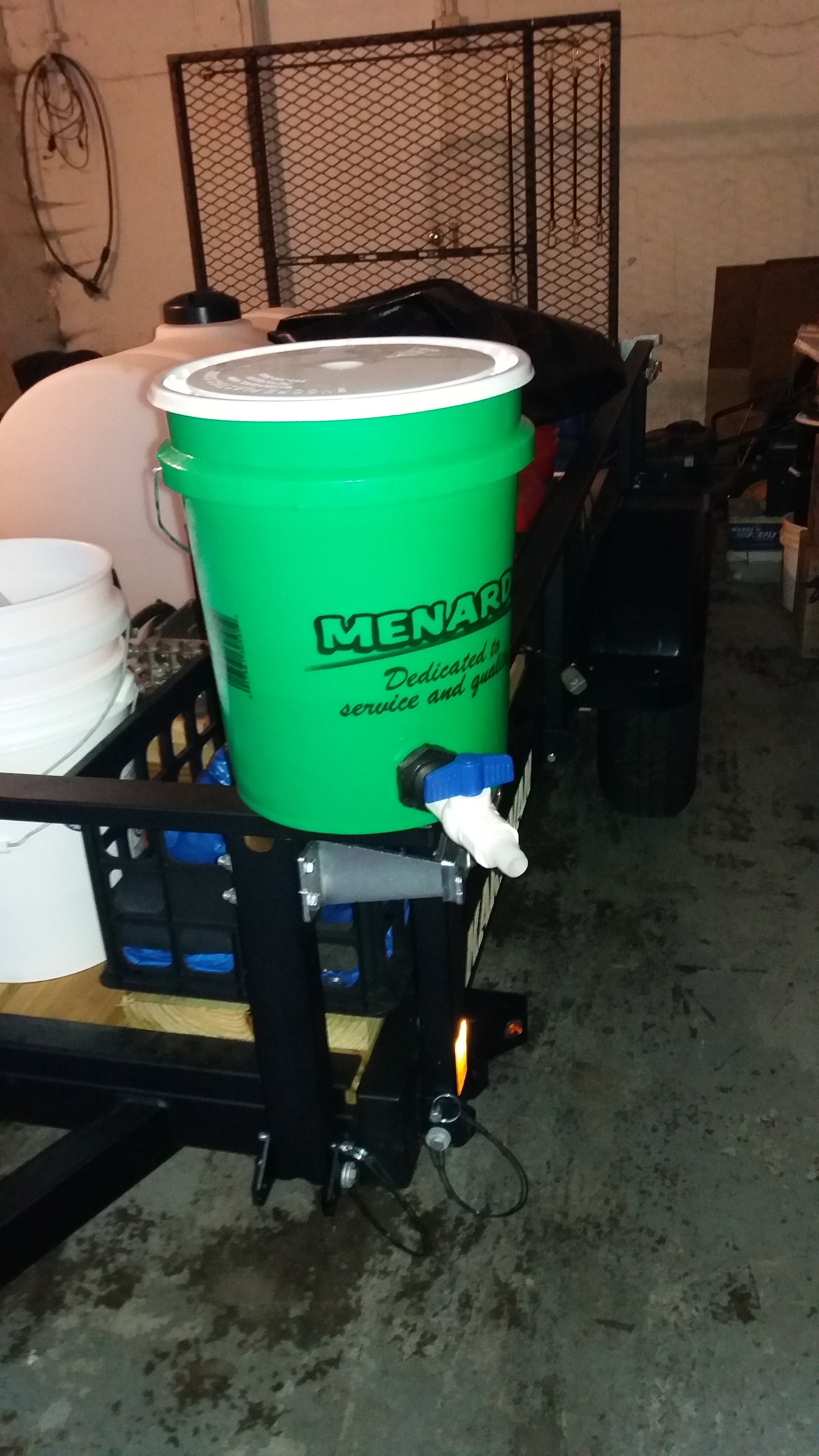
I hung my bucket from a hook and gravity fed my machine while I ran it. I wasn’t sure if antifreeze would circulate through my unloader bypass just by pulling the cord. Running my machine while letting on and off the trigger gun a couple times, I knew would circulate it. As far as stabil goes, I use it in power equipment, boats, and cars with no problems. I ended up draining my fuel system for my GX390 because that is what it said to do on page 30 of the Honda owners manual.
My method for “pre-winterizing” (freezing temps at night, but still washing during the day):
Park at the top of a steep hill on my way home.
Pull hoses down the hill and gravity drain them. This sucks the water right out of the filter and plumbing between my supply reel and tank.
Disconnect jumper hose between washer and reel (it’s on quick connects) and blow it out with my mouth.
Remove plug from second filter and drain tank
Remove bypass hose and drain it (also on quick connects)
When I get home, plug in heat tape that’s wrapped around the head of my pump, and place the rigid insulation box I built over the pump. The box is mostly just to keep some of the heat in (and the wind out) on nights down to 15-20° or so.
When I completely winterize, I do steps 1-5 above, but also:
Run RV antifreeze through the pump. I open up the banjo Y filter, close the valve between the tank and pump, and pour the antifreeze into the open filter. Pull the cord until I see red, refilling the filter as needed.
Then I put a ball valve on the outlet of the unloader, so I can force antifreeze through the bypass.
Drain gas tank and carburetor completely (I use the gas in my snowblowers)
I stopped using stabilizer awhile ago, but I do buy the non-ethanol gas whenever I can. Completely draining the tank and carb before long-term storage has completely prevented any gumming problem the following year.
An interesting trick I heard from a small engine mechanic, is a way you can pull more gas out of the carb without physically draining it (and maybe this common knowledge, idk ):
Shut off the fuel valve. As the engine starts to surge and sputter, close the choke. This will cause a little more of the fuel in the bowl to get burned up before it finally quits.
Just a tip for you guys who don’t physically drain your gas tank or carb.
I’m not sure what the banjo Y filter is or if my machine even has one. I’ll google pictures and check out my machine when I get home. If not, I’ll just use a piece of hose and funnel to get the RV antifreeze into the pump.

 ):
):