The schrader valve (air valve) on the low side of the pump doesn’t seem to be pushing the fluid through the unit like the old pump let it do. I am guessing that it might be faulty, but is there any other reason for it to happen that anyone can think of? I run my antifreeze through the low side suction and let it go through the unit, then blow it out. getting some low overnights and work is slow so I semi winterized it. When I disconnected some lines, I noticed that the k1 unloader was letting the antifreeze pass into the bypass line, which never happened with the pressure trapped unloader.
I think that’s a normal function of the flow actuated unloaders, they will still bypass a little even if you’re 100% on the trigger, like a trickle. So if you’re pulling antifreeze then go off the trigger you’ll start bypassing antifreeze…even if you don’t go off the trigger depending on how you have your unloader setup you still might bypass a little antifreeze. I have my setup so that I can pull antifreeze with suction and then with my bypass line disconnected from buffer tank I’ll go on and off the trigger when I start bypassing antifreeze I drop my bypass line in the antifreeze tank and let everything circulate for another 30 seconds or so refeeding itself on and off the trigger.
It’s funny you made this thread because I was actually meaning to message YOU and ask you if you thought it was a good way to setup my winterizing because I plan to keep working through the winter on some commercial projects I’m trying to score so I need a quick and dirty way to winterize up and then de-winterize back and forth probably 1-2 times a week at least.
paging Dr @OhioFloMo paging Dr @OhioFloMo
1 Like
I’d bet it comes down to how flow-actuated vs. pressure-actuated unloaders work. Both types will usually bypass a little water even while you’re on the trigger, but the big difference is how much pressure it takes for them to go into bypass. Flow-actuated unloaders kick into bypass starting at a much lower pressure, so that’s probably why your antifreeze is sneaking through once the lines are disconnected and the pressure is changed.
I’ve never used the air relief to winterize. I keep both my buffer and bypass hoses on cam locks so I can pop them off quick. I just drop both lines into a 5-gallon bucket with about 2 gallons of RV antifreeze, fire up the machine, wait until I see purple coming out of the hose, close the ball valve, then let it run until it comes through the bypass line. Once it cycles through, I shut the machine down and crack the valve to relieve any pressure in the line. This setup makes it easy if I pick up a random job, I can just fire it up, flush out the antifreeze, and not worry about backfilling the buffer tank. Around here RV antifreeze is about $3 a gallon, and it’s pretty quick and easy, so doing it multiple times at the end of the season isn’t a big deal.
2 Likes
Funny you mention that, because that is how I used to do it more or less. Then this bugger on here that keeps tinkering with stuff and mentioning new doodads and whatnots told me he uses antifreeze, then blows it out afterwards to minimize risk. Looking at you @dperez 
I had my pump go way before its time this year. I can only assume, because I don’t know for sure, that some water got into it through the winter. It was negative like 25 with the wind chill a couple of days and it sits outdoors. I normally top it off with antifreeze and let it sit full all winter. I’ve done it that way every year, but last year was colder and windier that the previous couple of winters.
Anyway, I think I’m just going to disconnect after the k1 and blow it out that way, and eliminate that. I unhook my bypass for every frost or freeze and empty my filters and blow out all hoses with the air compressor. I put one of those air hose reels on the wall beside it and it makes it easier to just flip a switch and drag hose to area. Stand up jobber with like 80 gallons or so, and two air filters inline.
wouldn’t it just be easier to disconnect quick connects/crack ball valve and let the system “breathe” with antifreeze in it? Seems like some extra unnecessary steps to blow things out with air compressor.


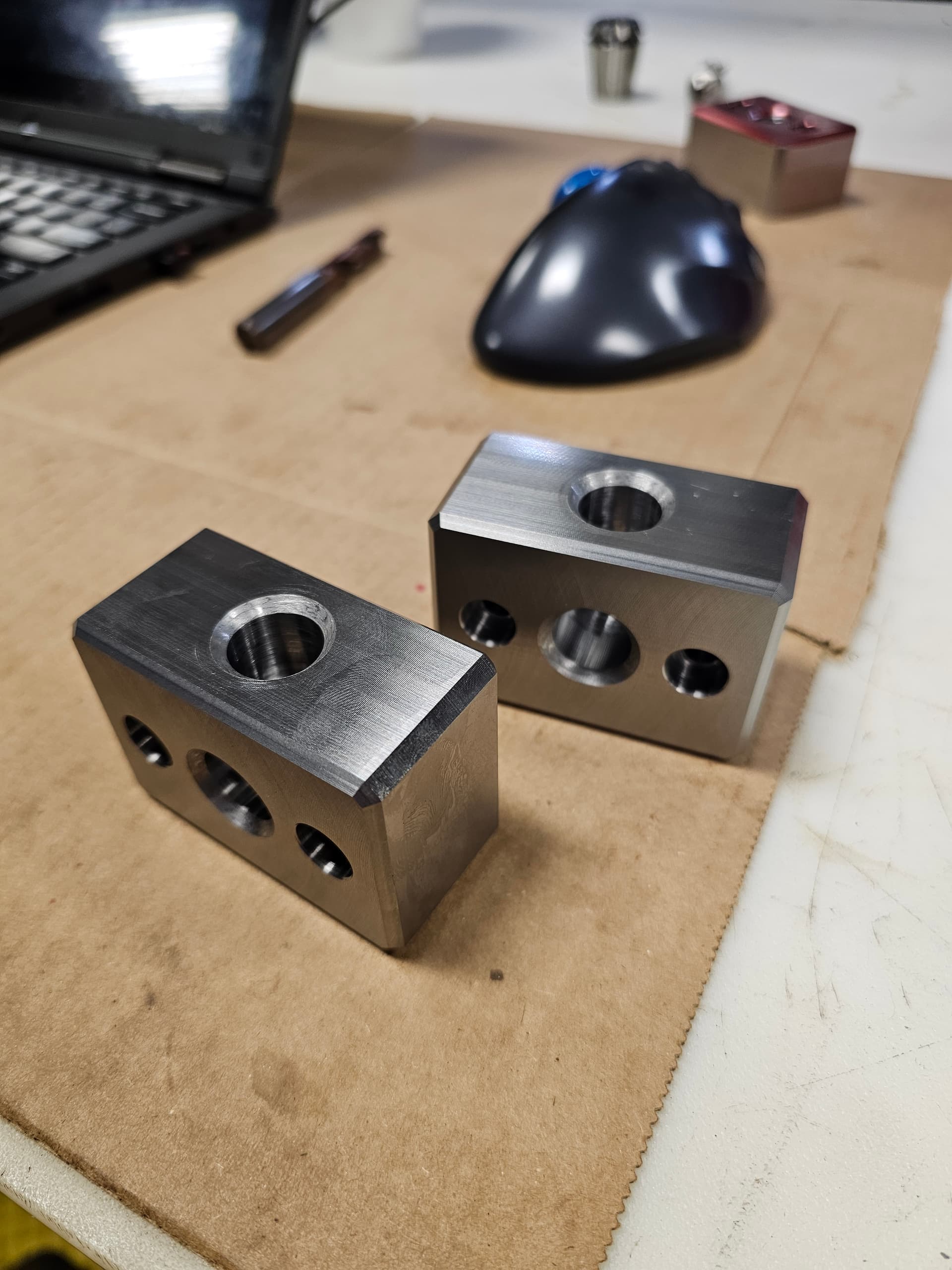
3/8 and 1/2 inch sizing available?
Yes of course, they’re just not all landing on the website at the same time lol I will be doing all sorts of configurations. Straight through, tees, elbows etc
3 Likes
Beautiful!
1 Like
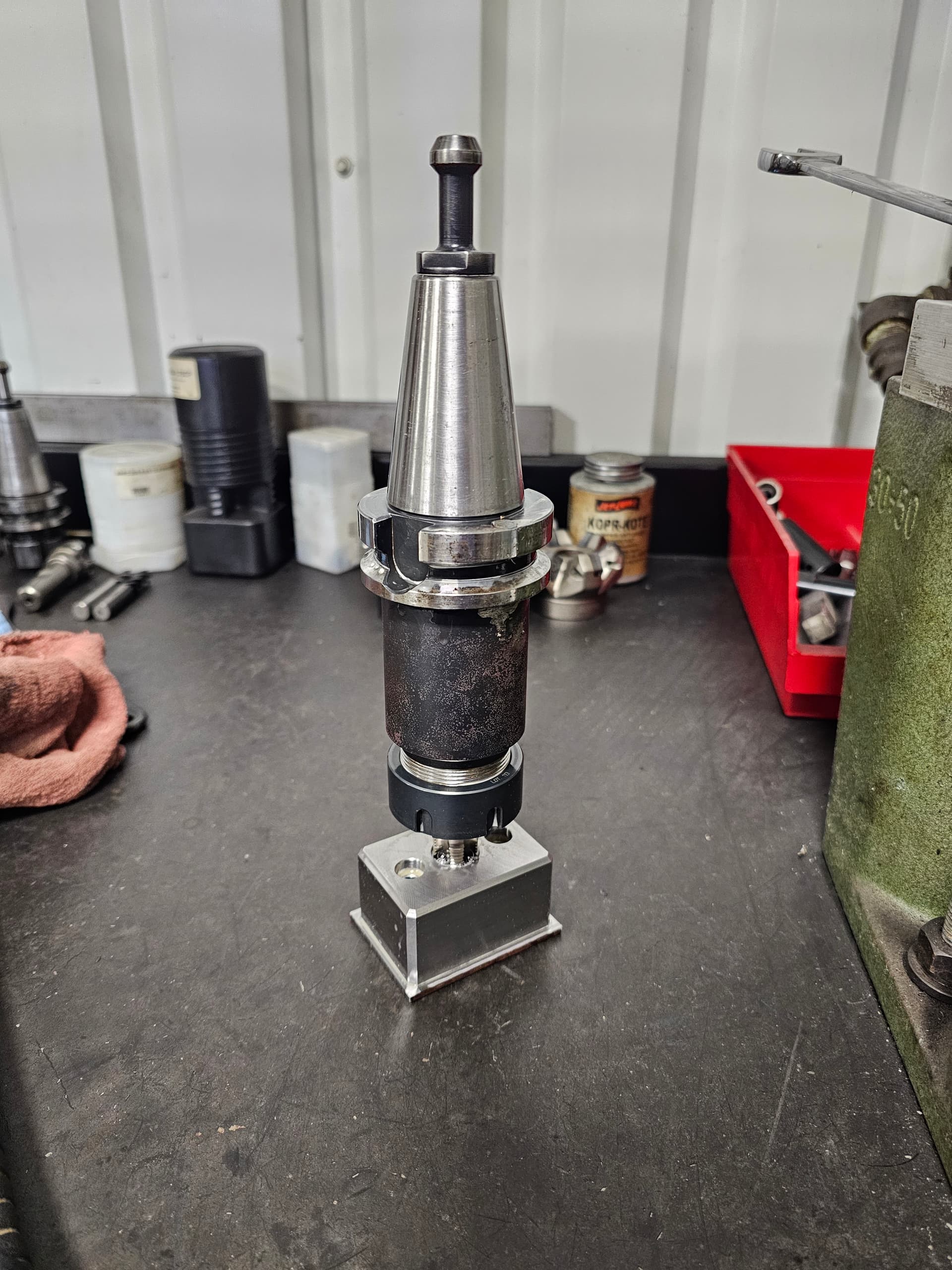
Thank you brother! I locked up the machines spindle running a tap even though a tapered port tool was used  . That’s why the threads are missing from the test parts. THEN got a thread milling tool programmed in. Now the threads are going to be extra clean! It’s the preferred method for precision threads but it’s very slow since it takes 3 passes to stay safe.
3 Likes
Pretty much my approach, as well. Except I have a drain hose on my y-trap with a ball valve on it, plus another valve between my tank and y-trap. So when it’s time to winterize:
- gravity drain the tank and hoses (park at the top of a hill and run them all downhill).
- Close the line from the tank
- Disconnect line to hose reel and attach gun
- Put y-trap drain hose and bypass hose in antifreeze
- Run pump on and off trigger, open & close injector bypass
- Throw a tarp over the rig and call it a season

But if I’m still washing and it’s getting below freezing overnight, I run warm water through my pumps and hoses (I have a hot water spigot on my house) and then throw a tarp over everything with a space heater set on low. I figure this approach is good enough if it’s just getting down to 20-25° for a few hours.
Yup same for me with the y-trap and valves. I’ve found various maintenance issues where being able to selectively close off and disconnect without having to drain everything has come in very handy.
That would be nice… maybe on the next house. I’m lucky to be able to unload my skid into the garage at the end of the day so that gives me some added protection from the elements. I’ve been toying with the idea of building a insulated box out of some 2” foam board to put over the pump/engine.
1 Like
That is what I was basically doing until dperez said he blew it out afterwards. He knows more about equipment than I do by far.
its an unnecessary step. Just relieve pressure in the lines by disconnecting whips and making sure ball valve isn’t closed.
Friends don’t let friends listen to people convince them to overcomplicate things.
Dez probably has a very specific reason that applies to his niche use-case, lol. I’ve never blown out anything after filling with antifreeze. I see the anti-freeze as another level of corrosion protection. Blowing it out introduces air and more potential for things to get crusty during extended periods of disuse.
1 Like