it seems to me that gear driven machines pump alittle more psi and gpm than belt with the same specs. has anyone noticed this ?
How many machines have you tested back to back? How did you test the gpm and psi on them? Same engines, water supply, hose length and fittings?
just from what I’ve observed

2 Likes
In general, gear driven systems are more efficient than belt driven systems. You have loss from belt slip with V belts where gears don’t slip. Even cogged belts or timing belts have more losses due to the friction of rubber teeth entering and exiting the pulleys. All belt driven systems generate a lot of heat, this is a dead giveaway you’re losing efficiency. Precision gears will have loses in the form of heat as well, but much less than belts.
exactly
i prefer gear drive, but you have to make sure it doesn’t rust onto the shaft is all.
I wanted to post on my findings. I know this is an old post but I have 2 identical motors and pumps. 2 harbor freight 670s and 2 tsf 2021 8gpm. I bought the diy kits from southside. 1 is the gear box and 1 is the belt. Both have exact same zk1 unloader both exact same tip-tested psi setting at the unloader each unit has its own bulkhead from my buffer tank with each own banjo filter and very similar length of 1in hose. Moral of the story my belt drive gets about 1/2 to 3/4 of a gallon more flow than the gear drive. And if ny buffer tank is low the gear drive gets even worse flow. If my ibc is full to the top my belt is way more noticeable stronger. Hope this helps someone. Not sure why I went with 1 and 1. But if the gear box ever goes I will 100% but the tensioner skid and pullys and have 2 belt drives.
I’d be curious to know what gear ratio both your belt pulley and gearbox are using.
1 Like
2 to 1 for the gear box and 2 to 1 for the pully system. Both of them run my predators at half the rpms to the pump.
Which brand is the gearbox? I haven’t come across many labeled 2:1… most are typically 2.2:1. If your pulley setup is 2:1 but the gearbox is actually 2.2:1, that difference alone could explain the lower flow and suction issues you’re seeing.
Personally, I prefer gearboxes for their smaller footprint as they work better in my layout. The only belt drive I’ve used gave me constant issues, though it was secondhand, which likely contributed to the problems.
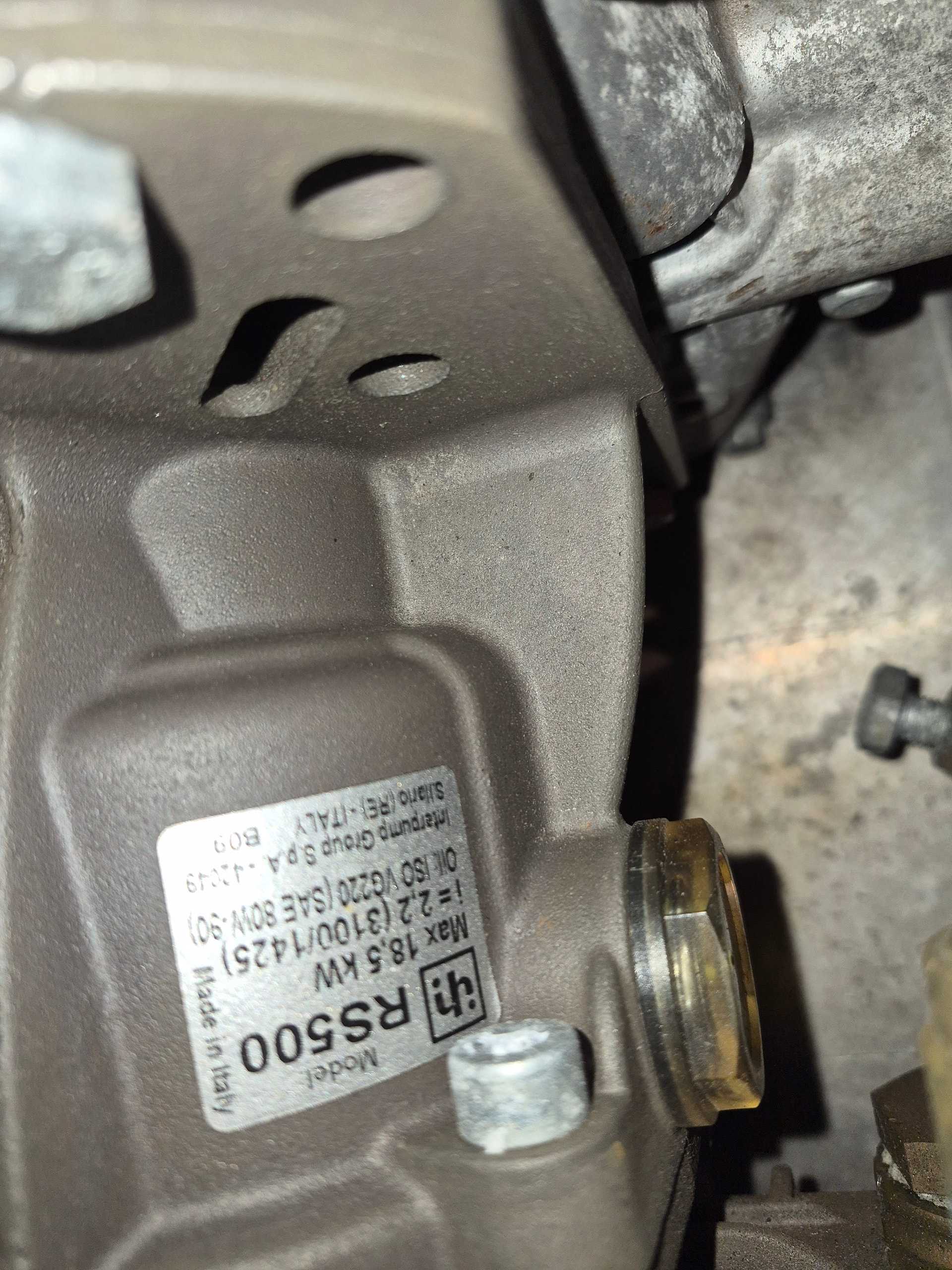
But for it to that much weaker seams a little off. If my ibc tote has all 225 gallons theres probably a 1.5-2 gal difference
Your engine spins at 3600 RPM, and the TSF2021 pump is rated for 8.5 GPM at its max of 1750 RPM. With a 2.2:1 gear drive, that drops pump speed to 1636 RPM (under the max, which cuts wear and heat for longer life, but as you’ve found out lowers flow and can make priming/suction from a tank a bit slower since it’s not at full rated speed). Switch to a 2:1 belt drive, and you get 1800 RPM (a slight overspeed past the max rated 1750 RPM for the pump, that squeezes out extra flow but adds heat and wear risk over time).
In a perfect world with identical setups, the RPM difference alone means 9.1% less flow on the gear drive (around 0.77 GPM gap from 8.5 GPM base). Toss in real-world stuff like belt slip (2-5% loss), overspeed bonuses, unloader settings, or minor setup variances, and a 1.5 GPM swing between the two is totally realistic.
2 Likes