Hey guys!
I’ve read all the deck cleaning related posts here that I could find. Yet I’m still not a 100% sure what to expect from my first deck wash tomorrow. Any suggestions would be greatly appreciated! Here’s what I am working on:
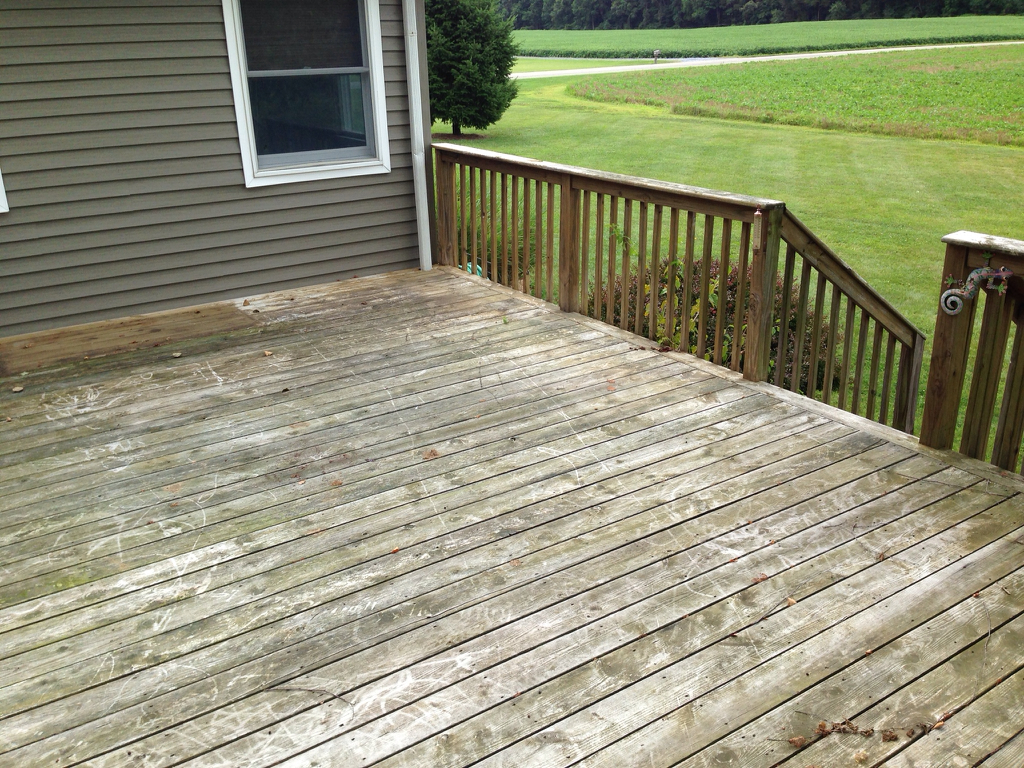
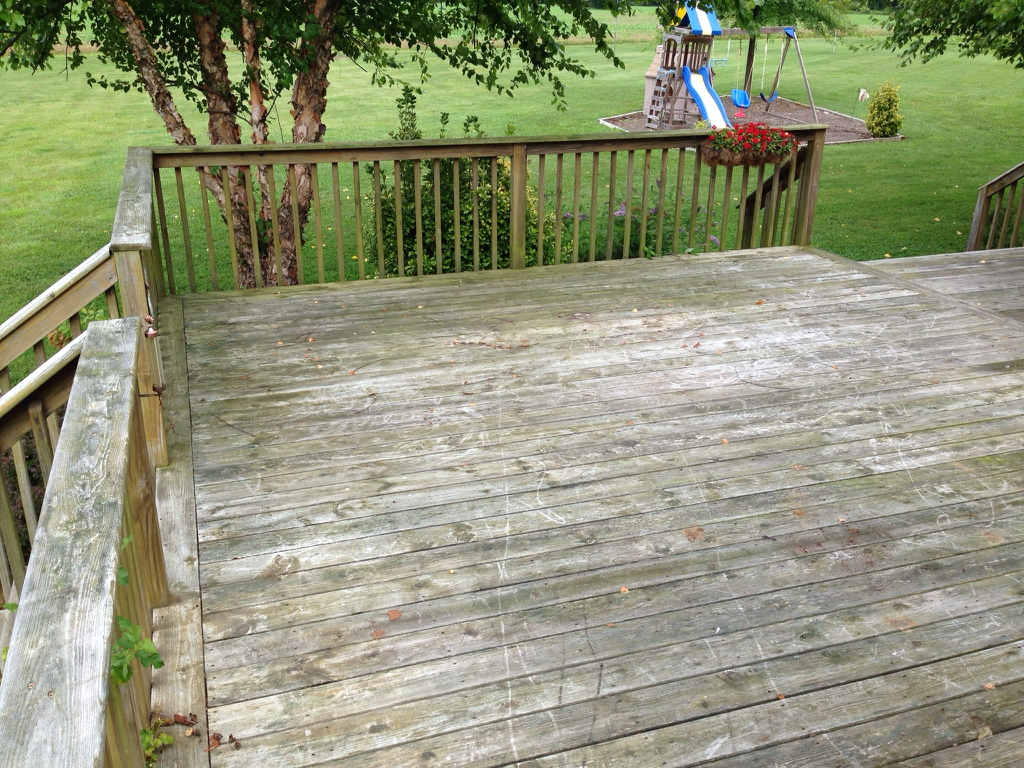
The deck I am going to be washing is pretty old. And from what I can tell it has either never been stained or if it has, it must’ve been a long time ago. It’s mostly green from mold and gray from the sun exposure. The customer doesn’t want it stained afterwards either. Just cleaned.
My plan is to downstream my regular house wash (3 gal 12.5% SH + 2 gal H2O) - I guess I don’t need to worry about using any surfactants (e.g. Elemonator). I will let it dwell for at least 10 minutes. Making sure the wood stays wet. Then rinse it with a 0040 nozzle making sure I don’t leave any overlaps or stop marks.
The next step, I want to use the F10 that I got from pressuretek. I’ve never used it before, but my understanding is that it would help with the grayish (UV damaged?) wood, and will bring some of the more natural looking color back.
Does all this sound OK or am I setting myself up for a disaster?
I understand that extra rinsing is a must. I cleaned my picnic table with SH and it pretty much turned white after drying. I wouldn’t want that to happen to the customer’s deck!
Wonder if F10 can bring some of that wood color back. Gonna try it now.
Thanks a lot!!
Alex K. with Northside Power Washing of Delmarva
Sent from my iPad using Pressure Washing Resource
don’t bleach it if you dont want it to turn white… use DSR 50 from powerwash.com or go to home depot and get some deck wash… bleach will do what bleach does best - bleach things…
I wonder if pressuretek carries an alternative to the DSR-50?
Would F18 be similar to that?
Alex @ Nothside Power Washing serving EasternShore Delmarva
Sent from my iPhone using Pressure Washing Resource
Alex,
Nothing at all wrong with using chlorine bleach as long as it is used responsibly in a cleaning solution and not solely. All studies by the Forest Products Laboratory show that 3-3.5% bleach will effectively kill mold and mildew from wood surfaces. The solution recommended includes a soap or detergent added to the solution which most people use the same soap as in there house wash, one part bleach to 4 part water. Soap and bleach really do not get a long well but mixed for a short time it is effective and it will give some cling to the vertical surfaces allowing the for the removal of the mold and mildew. In wood restoration we have many chemicals, cleaners, and restorers in our arsenal and it really is a matter of using each one correctly and where it should be used. For instance, you would use an oxygenated bleach over or near water and not even think of chlorinated bleach. Chlorine is used to remove pulp from lignin in the process of making paper and that is where you get the “chlorine” bleach is bad for the wood. Misuse of chlorine bleach is bad for the wood, not responsible use. The same with a stripper. most strippers are sodium hydroxide based and remove stains from the wood surface. Check your toothpaste and you will see sodium hydroxide as an ingredient yet no one is telling you don’t brush your teeth. It really is using the right dilution rate and using a product as it is intended. Good rule of thumb is to use only the strength needed to get the job done, not too much and go overboard as too much usually leads to damage.
With that being said one of the characteristics of bleach is that it reacts with the first thing it comes in contact with. If you have a wood surface that is aged with mold, mildew, and a lot of graying sometimes it is best to add a little sodium hydroxide or a little bit of whatever stripper you are using to give it a little boost. Won’t need a long dwell time so don’t leave it on too long, usually no more than 10 minutes and rinse off. You will get a much better end result with a more consistent “clean” of the wood. Neutralize and brighten with the oxalic acid product you have while the wood is wet and you should be fine!
1 Like
Thank you so much for a detail response!
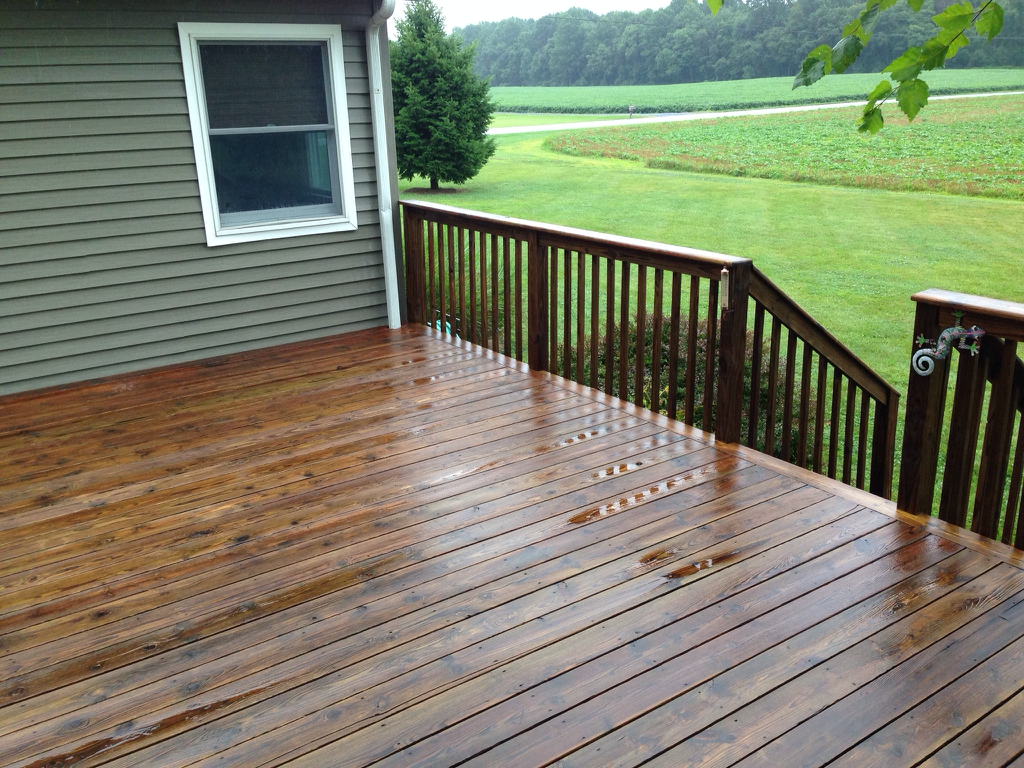
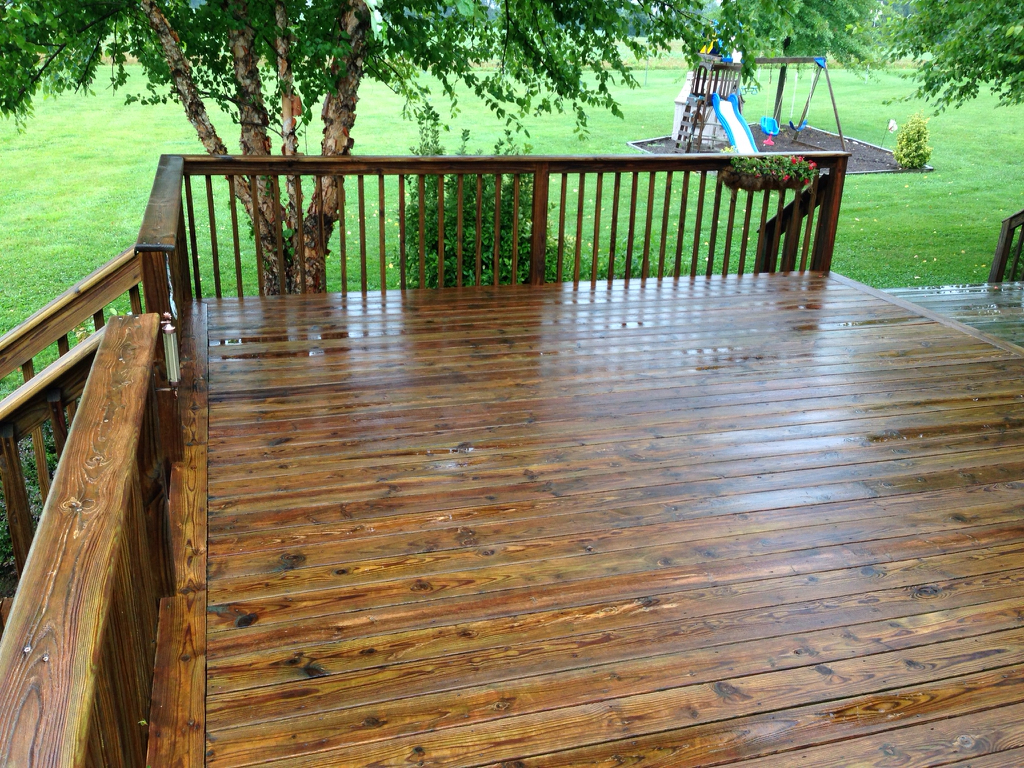
Finished 1/2 of my first deck. The heavy rain stopped me from finishing it all up. Gonna have to return tomorrow.
I used F10 from PressureTek. Percarbonate Cleaner. Mixed 2 gallons of solution in a bucket (8oz per 1 gal of water - stir stir stir!). Then pour it in a pump up sprayer (some of the powder that didn’t dissolve stays in the bucket). Pre-wet the deck surface. Then apply the solution generously. Within seconds it foams up and turns white. The countdown begins. I waited 20 minutes or so.
With 2510 nozzle (I have a 4gpm cold) while holding the wand about 6" away from the wood, I was able to remove all of the mold - and it was pretty heavy! And the nature color of the wood came back too. Then it started raining so I didn’t get to see what it would look like after it dries out. Hopefully everything will be OK.
Here’s before and after.
Alex K. with Northside Power Washing of Delmarva
Sent from my iPad using Pressure Washing Resource
Looks great! I haven’t done many decks or wood, I’ll be ordering some F-10.
Looks great! I haven’t done many decks or wood, I’ll be ordering some F-10.
Looks good! I would finish with some f9 to brighten it up a little.
Sent from my iPhone using Pressure Washing Resource
Great before and after shots. When I first started with wood I also liked to use percarb cleaners because they are pretty user friendly and you don’t HAVE to neutralize after. I switched to downstreaming F-18 for wood cleaning and haven’t looked back. So much easier and it takes just a few minutes to follow with F-8 and rinse.
Just a thought.
1 Like