We used F10 and F8 cleaners; thought it made a tremendous impact.
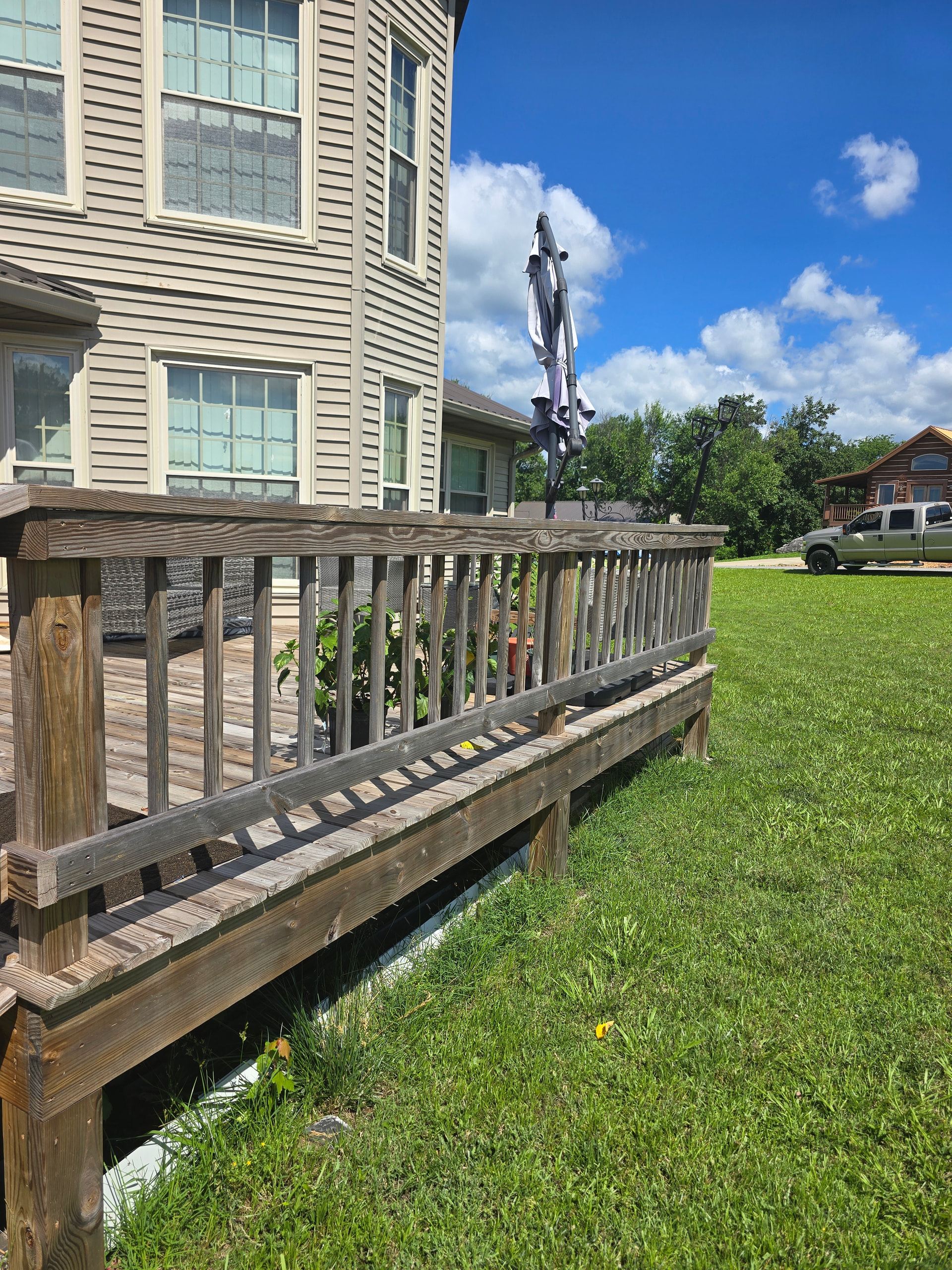
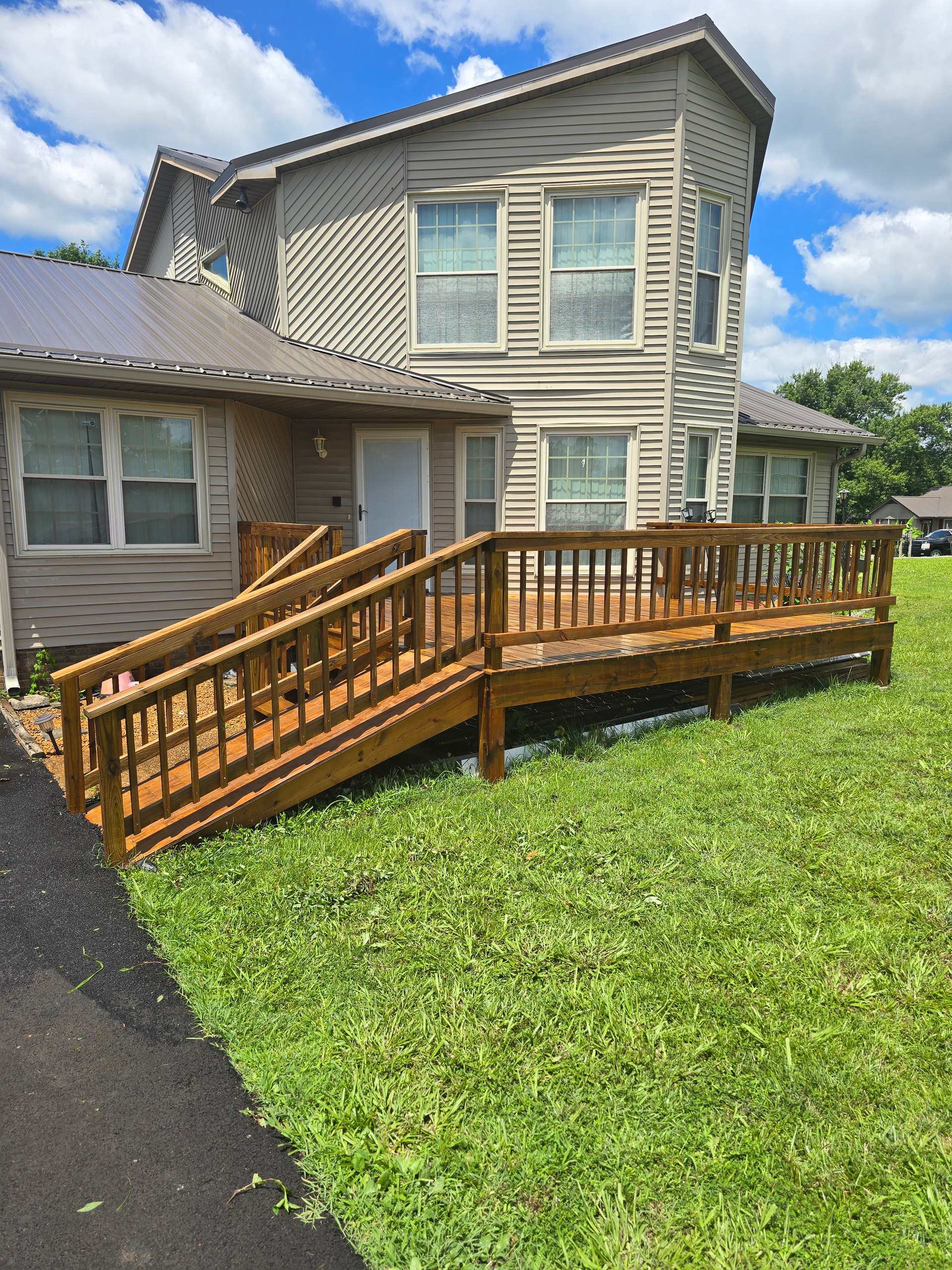
2 Likes
F10 and F8 are just precarbonate and oxalic?
1 Like
Yes, I have always used SHP but this worked well.
This is the way we clean decks except instead of percarbonate we use sodium hypochlorite and a small amount of sodium hydroxide (very small) and light pressure around 1200 PSI. Comes out perfect every time and free from organics. My problem with percarbonate is that it doesn’t actually kill the organic growth so the return to nasty is pretty quick for the customer. If you’re attentive with the cleaning you can get the deck looking clean but it won’t last. Years ago I used sodium percarbonate but I noticed my regular customers would have their decks regrown again with the black and green in short order. That’s around when @Racer enlightened me to the bleach/NaOH → oxalic method. Way better just IMO I never looked back and considered the percarbonate method after seeing how well the decks got clean and held up that year.
1 Like
Odd, Sp is a good cleaning product . SH stops working once it comes into contact with the substance while SP keeps working. No one uses it because it is hard to mix and requires agitation to be effective. It has to be mixed with hot water and it only lasts about 4-6 hours. If it isn’t fizzing it isn’t working, and it should fizz for awhile. I like to use it when I can because it is more environmentally friendly and less corrosive.
I’m not knocking you or your work, just curious since you do a lot of wood jobs, do you agitate SP? A stiff bi level deck brush works well getting it into all the knots, checks, cracks, and between boards.
I’m guessing the hydroxide is what is really doing the work, as it can be used as a cleaner or a stripper depending on strength of mix and dwell time. Everett was big on the difference between the two being the dwell time.
3 Likes
It just comes down to whether or not it kills organic and it doesn’t. At least not in my experience well enough to put my professional stamp on it. My business thrives on repeat customers, and if I clean the deck and it’s regrown algae in six months, then they’re definitely going with somebody else and I lose that easy yearly job. Sodium hypochlorite gives you that time that you need to make it a year before they call me back again. Funny enough, I got 2 deck cleans and a house wash today. One of the decks is my third year in a row cleaning it. It’s progressively gotten better each year. The SH works. I try not to overly complicate things. Little SH, little dwell and fan tip it all off. No mixing, no scrubbing (or real light scrubbing if using hydroxide) , keeping it simple. YMMV and I do love to hear about other strategies. If it weren’t for this site I’d never have read all Racer has to say and I’d probably be a worse cleaner than I am today.
ps the NaOH is only on bare wood that you have to get that dead wood “skin” off. It lifts it off well. Light mix short dwell agitate with brush. If the deck is stained or painted usually all you need is 1-2% SH and 10 minute dwell.
I hate to say this, but there’s a little bit of an art to how you approach the deck clean. Every deck is different. You can make many different methods work.
2 Likes
Here it is today, freshly stained. My customers won’t pay me just to clean a deck, I also stain them.
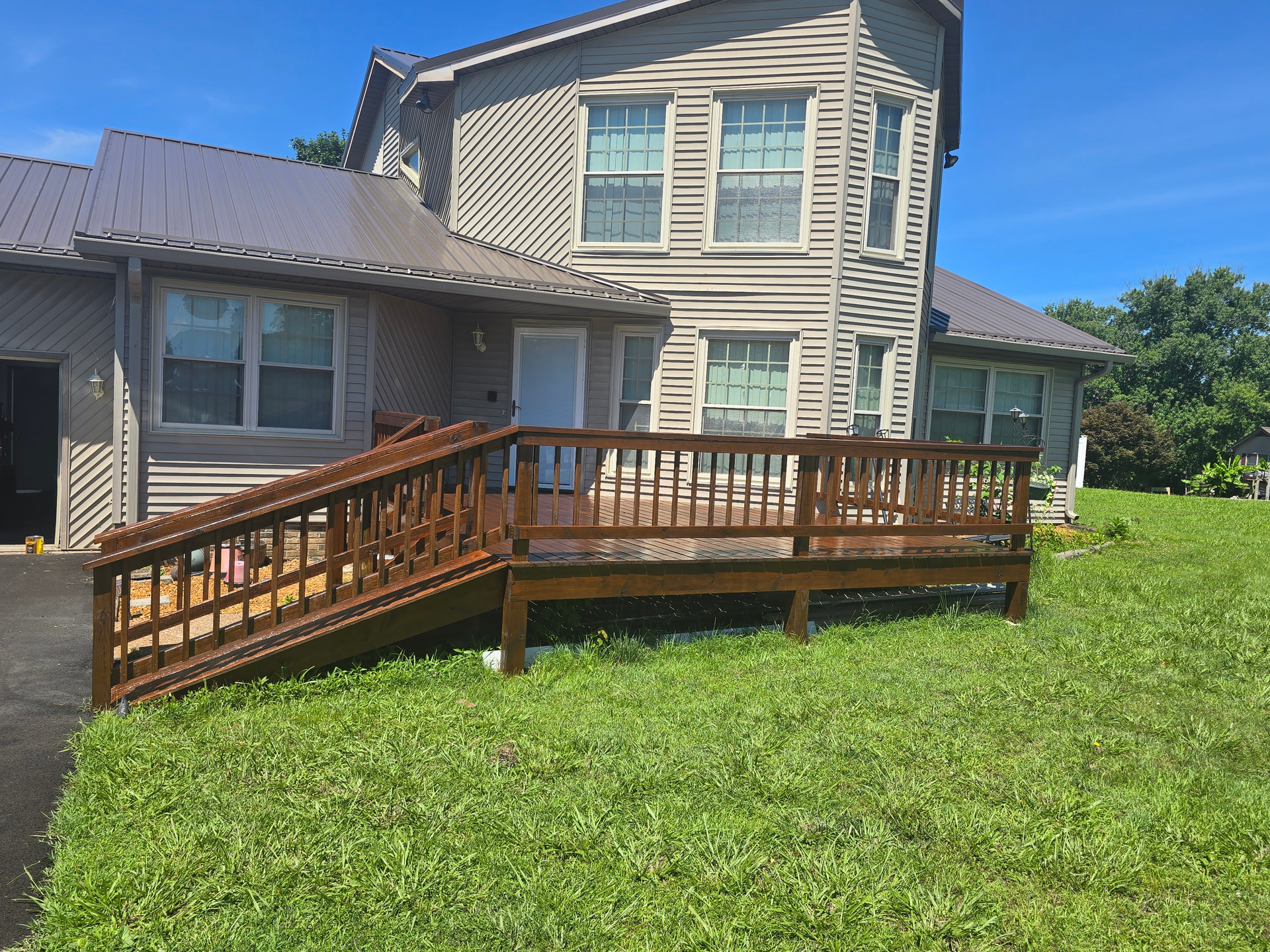
1 Like
beautiful! Australian Timber oil? That’s how it is here too for my company, most of our deck jobs are clean and stains. I like it that way! Nothing more satisfying than a deck stain job 
It is Cabot Gold stain. It wasn’t easy to work with. They recommend two coats and we had to wait several days for it to dry. It does look good, though.
Ah, cool. I’ve used the Cabot Gold oak tint many times. Its a go to of mine.
Just FYI you probably over applied the first coat if you had to wait days in between coats or for final coat to dry. The first coat should be light and penetrate and the second coat is a film forming coat almost like a varnish. You know what happens if you over apply varnish? This is what happens when you over apply the second coat of a film forming hybrid oil stain like Cabot Gold, tacky, slow drying, uneven. You should be able to apply second coat same day next one you do if you control first coat application. It actually delivers a better product for your customer and also is more efficient for your completion. Win win.
2 Likes
That makes sense; I’m guilty of applying too heavy of a coat! Thank you for the help!
1 Like
definitely save that one for your portfolio…you did a great job…stuff looks amazing fresh (and holds up pretty good too!). I got a bunch of the Cabot Gold deck pics in my portfolio I show customers. The Cabot Australian Timber Oil is good for looks too. I got one of those coming up this week. The “natural” makes pine come out looking like teak, its phenomenal stuff.
(not a Cabot rep, just love the results  )
)
It’s so interesting, because I’d say the exact opposite about SH and SP and wood decks. … which brings me back to the conclusion I’ve been arriving at a lot lately: it’s not the method; its the operator. Or: It’s not the plane, it’s the pilot. 
1 Like
Hey OutsideCleaner, good to see you. You are a master of percarbonate. We all have much to learn from you if you want to write a little on this rainy (for you too?) Saturday afternoon. Are you saying that SP is better at killing organics than SH!?
First, I’d argue that the experience of the operator is AS or MORE important than the specifics of the cleaning process. I’d rather have my deck cleaned the “wrong” way by somebody with real experience under their belt than the “right” way by an unskilled operator who hasn’t been around long enough to see how their work holds up and learn from mistakes that we all initially make. I know a few guys doing things that I think are crazy and don’t make sense to me, but they’re getting results and their customers seem long-term happy and that’s what matters. So: If what you’re doing is working for you, keep at it.
That said… if I pull up to a bare, neglected hardwood or pressure-treated deck afflicted with typical algae, mildew, etc and I can clean it however I want, I’m grabbing the bucket of sodium percarbonate and sodium metasilicate powder to make a cleaning solution like 90+% of the time versus using the mix of sodium hypo and sodium hydroxide that you mention in this thread. The other 10% I’ll use just sodium metasilicate or just sodium hydroxide.
A sodium hypochlorite/sodium hydroxide mix is definitely the more powerful antimicrobial than percarb/meta, but deck restoration isn’t just about killing organisms—it’s about restoring the wood while preserving as much sound material as possible. My preference for sodium percarbonate and sodium metasilicate is primarily that - compared to a mix relying in part on sodium hypo - it does better at penetrating weathered fibers and loosening degraded organic material without the same degree of oxidation to the wood itself. Hypochlorite in the mix certainly makes wood brighter, but part of that effect comes from oxidizing the wood surface which you’re trying to clean, not from removing biological growth or environmental contamination. I’m not saying this about you specifically, but I do think that too much of our industry confuses “bright” with “clean.” Especially when it comes to wood, those are not the same.
Your claim that percarbonate “doesn’t actually kill the organic growth” isn’t true. Your previous work with it and the poor long-term results might have been from an issue of mixing, or application strength, or dwell time, or surface temps, or surface moisture… but its anti-biological properties are well-understood and well-documented. It’s often marketed as being the “eco-friendly” option for exterior cleaning, but that’s due to its rapid chemical degradation in the open environment rather than being somehow safe for organic growth. Embarrassing secret: Since 2011, I’ve accidentally killed more plants with percarb than with SH. Yes, I do use both. They are different tools in the same toolbox.
I don’t normally do commercial work but many years ago I agreed to clean 46 little mahogany and pressure-treated decks at a condo complex down in Provincetown. These were all about 10 years old and had never been professionally cleaned. Many unit owners had, though, put in frequent and ongoing effort to keep the decks clean (with varying results) and I was able to speak to many of them about what they had tried. What a fabulous education that was. The thing that I remember most: decks cleaned with “oxy” products were far cleaner than the bleach examples, and the wood itself was in better shape. Oxy decks, the wood fibers were strong. Bleach decks, the fibers often looked like skin peeling from a sunburn. Bleach decks, the nails and screws were bleeding rust stains into the surrounding wood; not so with oxy.
To be fair, these decks had not been professionally cleaned by anyone with your experience. See my comment at the top of all this…
I guess my last thought for the moment: in my market on Cape Cod, decks are usually adjacent to bare cedar siding. A hypochlorite/hydroxide mix is frequently a non-starter because of the risk of damaging or discoloring adjacent unfinished wood. I’ll see a job like you pictured in this post (PT deck adjacent to vinyl siding) maybe once a year. Everything else is decking adjacent to bare white cedar siding, or hardwood roof decks on top of a red cedar roof, etc.. For that reason, I prefer a chemistry that’s effective on the deck while being far more forgiving around surrounding bare cedar.
The great thing about our industry is that there isn’t One Single Way to do things; we have room to be creative and to innovate and to lean into our personal preferences. If you’re getting results which are holding up long-term and your customers are happy, that’s tough to argue with.
5 Likes
Nate, this is absolute gold. Thank you so much for writing this out. I may not drastically change my methods (but I’m definitely considering experimenting a little more with SP and SM) but I’ve FOR SURE absorbed something here. I’ve done a deep dive on your post history over the years and there’s a lot of things I’ve learned from you actually. I’ve been cleaning and staining decks for many years now and I’ve come far but I try to always remain the student not because its easy to be in that position in perpetuity but because it will produce the best long term results for my customers. I’m ruthless in wanting the best for my customers because it is so humbling that I’ve been able to carve a living out of doing this and provide for my family with this company.
This became like an old school PWR thread, wow!!!
4 Likes